Welcome to the world of email marketing! In this exciting digital realm, where pixels dance and subject lines sing, there’s a powerful tool that can take your email campaigns to new heights: segmentation.
What exactly is segmentation, you ask? Well, get ready to embark on a journey of targeting brilliance as we dive deep into this game-changing strategy.
Segmentation, in a nutshell, is the art of dividing your email subscribers into distinct groups based on certain criteria. Think of it as a masterful act of sorting your recipients into smaller, more manageable clusters.
So fasten your seatbelts, grab a cup of your favorite brew, and prepare to unravel the wonders of segmentation in email marketing. Get ready to transform your campaigns from a mere spray-and-pray approach to a finely tuned symphony of tailored messages. Let’s dive in!
What is Segmentation?
Data segmentation in email marketing is a game-changing technique that involves dividing your subscribers into distinct groups based on specific characteristics or behaviors. It goes beyond the organization, allowing you to craft personalized messages that speak directly to each segment’s interests and needs.
Imagine running an online boutique and sending tailored emails to men, women, or sustainable fashion enthusiasts. Segmentation boosts performance and enhances the customer experience.
In the next section, we’ll explore different segmentation types and how to maximize the impact of your campaigns.
What Are The Different Types Of Email Segmentation?
Now that we’ve delved into the concept of data segmentation, let’s explore the various types of segmentation that can take your email marketing game to new heights.
Each type offers a unique perspective on understanding your audience and delivering targeted messages that hit the bullseye.
Geographic Segmentation
Geographic segmentation allows you to divide your subscribers based on their location. Whether you’re targeting customers in different cities, countries, or even continents, this type of segmentation enables you to customize your email content to suit regional preferences, time zones, or even climate-related factors.
It’s a fantastic way to ensure your messages resonate with your audience on a local level, making them feel right at home.
Behavioral Segmentation
Behavioral segmentation focuses on how your subscribers interact with your brand. You can create segments that align with their preferences and habits by analyzing their past actions, such as previous purchases, website browsing behavior, or engagement with specific email campaigns.
This type of segmentation allows you to send tailored recommendations, personalized product suggestions, or re-engagement campaigns to win back their attention. It’s like having a virtual assistant who knows exactly what your subscribers want before they even realize it themselves.
Data Segmentation
Data segmentation, the star of our show, encompasses various data-driven factors to divide your subscribers into distinct groups. This can include demographics, such as age, gender, or occupation, as well as psychographic information like interests, lifestyle choices, or values.
By diving deep into the data, you can gain invaluable insights into what makes your audience tick and create hyper-targeted segments that speak directly to their desires and aspirations.
Data segmentation is all about harnessing the power of information to deliver a personalized email experience that leaves a lasting impact.
In the next section, we’ll uncover the remarkable benefits of email segmentation for businesses of all sizes.
How Can Segmentation Benefit My Business
Segmentation is a game-changer for businesses, boosting the effectiveness of email campaigns by delivering targeted messages that increase engagement, conversions, and revenue. This personalized approach cuts through the noise and provides content that resonates with specific audience segments, resulting in higher conversion rates and a stronger return on investment.
Additionally, segmentation enhances customer satisfaction and loyalty by catering to unique interests and needs. This personalized touch fosters a deeper connection, building trust and encouraging repeat purchases and advocacy for your brand.
In the next section, we’ll explore practical tips and best practices for implementing segmentation in your email marketing campaigns.
Our Favorite Segmentation Strategies
Unleash the power of data segmentation in your email marketing campaigns with these supercharged strategies that leave a lasting impact on your audience.
Strategy 1: Demographic Segmentation
Tailor your email content to specific audience segments by dividing subscribers based on age, gender, location, or occupation.
For example, a clothing retailer can send different campaigns to male and female subscribers, showcasing products that align with their unique styles and preferences. Leverage demographic data to make your subscribers feel seen and understood.
Strategy 2: Purchase History Segmentation
Analyze subscribers’ past buying behaviors to create segments based on product preferences, purchase frequency, or average order value.
Send targeted recommendations, personalized offers, or loyalty rewards that are highly relevant. Boost engagement, repeat purchases, and customer loyalty.
Strategy 3: Engagement Level Segmentation
Segment based on engagement levels to identify active, moderately engaged, or inactive subscribers. Send targeted re-engagement campaigns to reignite interest and drive interaction. Encourage inactive subscribers to rediscover your brand.
Incorporate these strategies into your email marketing to forge stronger connections, drive higher conversions, and achieve greater success. In the next section, we’ll explore practical tips for successful implementation.
Case Studies of Successful Segmentation Strategies
Let’s dive into more case studies to see how famous brands have harnessed the power of data segmentation to achieve remarkable results:
Case Study 1: Nike
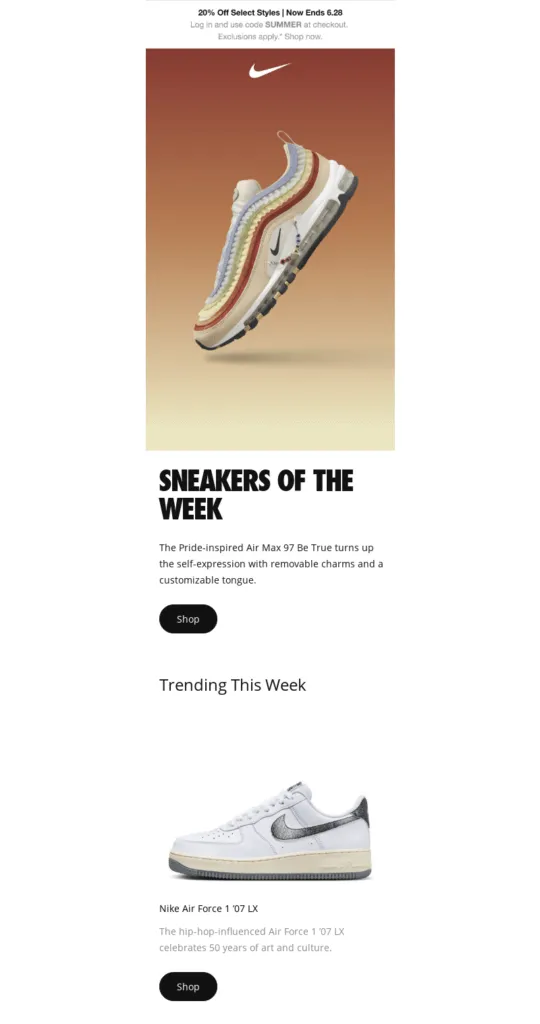
Nike, a global sports brand, implemented data segmentation by dividing their subscribers into distinct groups such as runners, basketball enthusiasts, and soccer players.
By delivering personalized content and product recommendations tailored to each segment’s interests and preferences, Nike experienced a significant boost in engagement and sales. Their targeted approach resonated with their audience, resulting in higher conversion rates and customer satisfaction.
Case Study 2: Starbucks
Starbucks, the renowned coffeehouse chain, utilized data segmentation to improve customer retention and loyalty. By segmenting their audience based on individual preferences and visit frequency, Starbucks crafted personalized offers and customized recommendations.
This approach made customers feel valued and understood, fostering a deeper connection with the brand and driving increased customer loyalty and repeat business.

Case Study 3: Amazon
As the e-commerce giant, Amazon leveraged demographic and purchase history segmentation to drive sales growth. By analyzing customer data and behavior, they were able to provide highly relevant recommendations and deploy targeted email campaigns.
This strategic use of segmentation led to a remarkable 35% increase in sales, showcasing the power of personalized recommendations and tailored messaging.

Case Study 4: Spotify
Spotify, the popular music streaming platform, implemented segmentation strategies based on users’ music preferences and listening habits.
By understanding their users’ musical interests, Spotify was able to curate personalized playlists, recommend similar artists, and send targeted email campaigns, resulting in increased user engagement and satisfaction.

Case Study 5: Sephora
Sephora, a leading beauty retailer, successfully employed data segmentation to cater to their diverse customer base. By segmenting their subscribers based on makeup preferences, skincare needs, and purchasing behaviors, Sephora delivered personalized product recommendations, exclusive offers, and beauty tips.
This tailored approach significantly improved customer engagement, increased sales, and fostered brand loyalty.

Case Study 6: Netflix
Netflix, the popular streaming service, utilized data segmentation to enhance their user experience. By analyzing viewers’ watch history and preferences, Netflix created personalized content recommendations and sent targeted email campaigns highlighting new releases and similar shows.
This approach resulted in increased user satisfaction, longer viewing sessions, and reduced churn rates.

Case Study 7: Airbnb
Airbnb, the online marketplace for accommodations, effectively implemented segmentation strategies to cater to different traveler personas. By segmenting their audience based on travel preferences, location interests, and budget ranges, Airbnb was able to deliver tailored recommendations and targeted promotions, increasing bookings and customer satisfaction.

Case Study 8: Target
Target, a major retail chain, implemented data segmentation to deliver personalized offers and promotions. By analyzing customer purchase history, Target created segments based on shopping preferences, household demographics, and life events.
This allowed them to send targeted coupons and product recommendations that resonated with each segment, resulting in higher sales and customer loyalty.

These case studies demonstrate the power of data segmentation in email marketing. Personalization drives engagement, loyalty, and conversions.
By taking inspiration from these successful brands, you can leverage data segmentation to elevate your own campaigns and create meaningful connections with your audience.
What To Avoid
Segmentation only works well when you have a sufficiently large database. If your audience is too small, each segment becomes too granular, making the effort of creating and emailing them less worthwhile.
As a general rule of thumb, until your database reaches approximately 30,000 subscribers, there may not be a significant need for segmentation unless you have specific shoppers in specific categories where it makes obvious sense.
While segmentation can be a powerful tool in your email marketing arsenal, it’s important to steer clear of common pitfalls to ensure its effectiveness.
Here are some things to avoid when it comes to data segmentation:
- Over-segmenting: Avoid creating an excessive number of segments as it can lead to unnecessary complexity and diluted messaging. Strike a balance between relevance and manageability.
- Neglecting data quality: Ensure your data is accurate and reliable. Neglecting data quality can result in flawed segmentations and ineffective campaigns. Regularly clean and update your subscriber data to maintain its integrity.
- Lack of testing: Don’t skip the testing phase. Testing your segmentation strategies and campaigns before launching them at full scale is crucial. A/B testing allows you to fine-tune your approach and identify the most effective segmentation tactics for your audience.
- Ignoring feedback and analytics: Data segmentation is an ongoing process. Pay attention to feedback from your subscribers and analyze campaign performance metrics. This feedback and data-driven insights provide valuable guidance for refining and improving your segmentation strategies.
By avoiding these pitfalls and continuously refining your segmentation approach, you can harness the true power of data segmentation in your email marketing campaigns.
Looking To Get Started With Email Marketing? Get A Free Audit From Our Team Of Experts Today
In conclusion, data segmentation is the secret sauce that takes your email marketing to new heights. By dividing subscribers into distinct groups based on characteristics or behaviors, you deliver personalized messages that resonate deeply.
This approach increases engagement, conversions, and customer satisfaction, driving campaign success. Avoid pitfalls like over-segmenting, neglecting data quality, skipping testing, and ignoring feedback.
Get a free audit from SmartMail’s experts. We’ll optimize your segments and maximize campaign results. Visit our free audit page now and unlock the potential of data segmentation.